
AM Legal Services Inheritance Laws in Delhi Guide
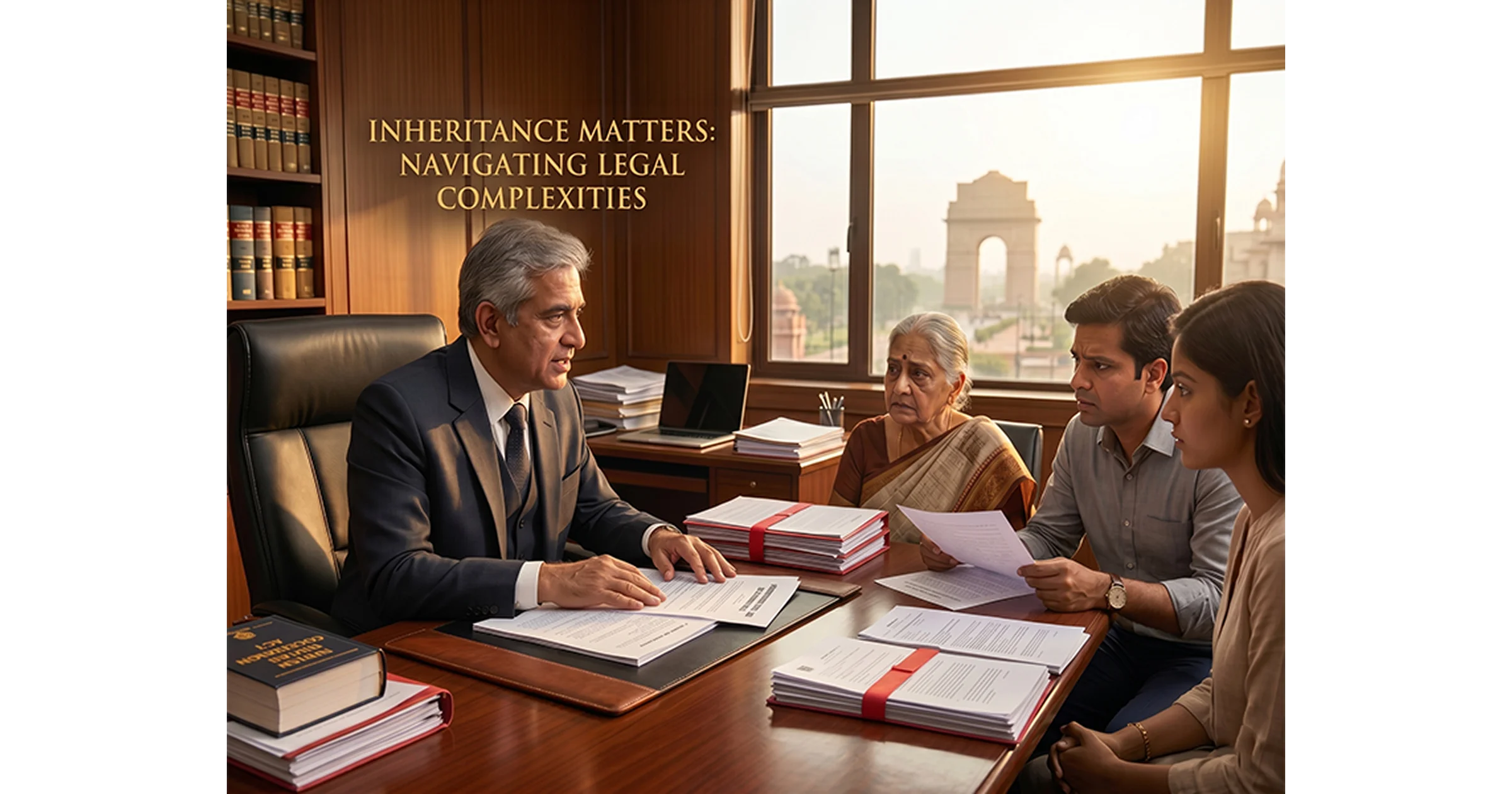
Inheritance in Delhi- How Ownership is Decided?
When a family member passes away, the last thing you want to deal with is a property dispute. But in many families in Delhi, that’s exactly what happens and the best property lawyers in Delhi can help you navigate through such situations where siblings stop talking, cousins contest claims, and property that should have been settled quietly ends up in court for years.Quite a sad state of affairs, but property matters among families after someone’s death become way too sour and if not handled well might also get you into a lot of trouble.
Let me walk you through how inheritance actually works under Indian law, so you know what to expect.
What laws of inheritance work and how?
The rules that apply depend on the religion of the deceased. For Hindus, Buddhists, Jains, and Sikhs, the Hindu Succession Act, 1956, governs inheritance. For Muslims, it’s personal law. For Christians and Parsis, the Indian Succession Act, 1925, applies.
Under the Hindu Succession Act, if a person dies without a will (what lawyers call dying “intestate”), the property gets distributed among Class I legal heirs first. This includes the spouse, children, and the mother. To add, all Class I heirs have an equal share. If there are no Class I heirs, the property passes to Class II heirs, and so on.
If a person leaves behind a valid will, then the property passes according to the will. A will in India doesn’t need to be registered to be legally valid, but registration at the Sub-Registrar’s office makes it significantly harder to challenge. We advise clients to register their wills as a precaution.
Where does the complication begin?
Here’s where things get complicated. When there’s no will and multiple heirs exist, each of them has a legal claim, and it makes matters messier to deal with. If they can’t agree on how to divide the property, any one of them can file a partition suit in court. The court then decides how the property gets split. However, on the flipside, this process can take years if not handled correctly and hence theBest Property Lawyers in Delhi should be your go-to to deal with the same.
Dealing with Ancestral Property
Ancestral property is a separate matter. Under Hindu law, a son or daughter has a birthright in ancestral property regardless of any will. This right is called “coparcenary” and was extended to daughters by the 2005 amendment to the Hindu Succession Act, confirmed by the Supreme Court in 2020.
Obtaining a Succession Certificate or Legal Heir Certificate is often the first practical step after a death as these documents allow heirs to claim assets and transfer property in their names. The best property lawyers in Delhi can help you obtain these from the appropriate court with minimal delay.
NRIs dealing with inherited property in Delhi face additional complications around travel, documentation, and Power of Attorney requirements. This is something we handle regularly at AM Legal.
Conclusion
If you’re dealing with a property inheritance and aren’t sure how to proceed, or if there’s a dispute among family members, speak with the Best Property Lawyers in Delhi before the situation escalates.
At AM Legal, we help families navigate inheritance with clarity and care. Connect with the best property lawyers in Delhi today and proceed with clarity.