
Newsbeat

India-US Trade
Newsbeat

India-US Trade Deal Talks Heat Up Before July 9 Tariffs

Indian Negotiators Extend Washington Stay Ahead of 9 July Tariff Deadline Can New Delhi and Washington clinch an interim trade pact before steep U.S. tariffs snap back? Quick-Look (TL;DR) Deadline What’s at stake Main Indian ask Main U.S. ask 9 July 2025 26 % reciprocal tariff on all Indian exports announced in April; Section 232 duties on steel & aluminium already at 50 % Full elimination of extra U.S. duties and a promise of no new tariffs Wider market access—especially in agri-food, whisky, autos, and GM crops India’s Wishlist America’s Wishlist “Agriculture and small industries cannot be sacrificed for U.S. interests,”– Ashwani Mahajan, Swadeshi Jagaran Manch Ruling-party allies and farm lobbies warn of street protests if GM food or blood-meal dairy enter the Indian market. Scenario Impact on India Impact on U.S. No deal; tariffs kick in Exporters in steel, jewellery and textiles face ~$8 bn in extra duties; rupee may weaken Higher input costs for U.S. manufacturers; potential WTO challenge Partial deal Relief on select sectors (e.g., textiles) but agri dispute continues Some tariff relief, leverage retained for future rounds Comprehensive interim deal Gains wider duty-free access; commits on limited agri lines Political win for Trump; diversified supply chains away from China Washington’s rare-earths accord with Beijing removed a major bottleneck for U.S. manufacturers and showed that quick wins are possible when core strategic needs alignNew Delhi fears losing its current edge—U.S. buyers have shifted orders from China to India since 2023—and wants to lock in that advantage before the tariff pause ends. Negotiators are racing the clock. A mini-deal limited to tariff suspensions and a narrow list of concessions remains the likeliest outcome. If talks spill past 9 July without an agreement, expect swift retaliatory moves from New Delhi—possibly reviving suspended tariffs on Californian almonds and Washington apples—and litigation at the WTO.

Newsbeat

Mohammad Reza Seddiqi Saber Dies in Airstrike

Mohammad Reza Seddiqi Saber: Senior Iranian Nuclear Scientist Killed in Israeli Airstrike Amid Ongoing Middle East Tensions By Stronic Media | June 24, 2025 In a significant escalation of the ongoing conflict between Israel and Iran, one of Iran’s top nuclear scientists, Mohammad Reza Seddiqi Saber, was killed in an Israeli airstrike in northern Iran. The incident occurred during a series of coordinated attacks that reportedly resulted in the deaths of 14 senior Iranian nuclear personnel, according to Iranian state media and a BBC report citing government sources. Who Was Mohammad Reza Seddiqi Saber? Mohammad Reza Seddiqi Saber, 51, was a high-ranking official within Iran’s nuclear development apparatus. He led the Shahid Karimi Group, a division operating under Iran’s Organisation of Defensive Innovation and Research (SPND). This organization, which has long been under international scrutiny, is suspected of playing a central role in Iran’s covert efforts to develop nuclear weapons capabilities. According to the U.S. State Department, Saber was involved in explosives-related research and was connected to projects aimed at the development and testing of technologies potentially applicable to nuclear explosive devices. His activities led to his inclusion on the U.S. Treasury’s Office of Foreign Assets Control (OFAC) Specially Designated Nationals (SDN) list. He was subject to comprehensive sanctions, including asset freezes and travel restrictions. Circumstances of His Death Saber was reportedly killed at his parents’ residence in Astaneh-ye Ashrafiyeh, a town in Iran’s Gilan Province, during an overnight Israeli airstrike. Local officials confirmed that four residential apartments were destroyed in the attack, suggesting the use of precision-guided munitions. Iranian authorities identified the remains and confirmed the deaths of Saber and several others. Tragically, his 17-year-old son had been killed just days earlier in a separate Israeli strike on June 13, adding to the personal toll the conflict has taken on families of Iran’s defense elite. Broader Context: Israel-Iran Conflict Intensifies This targeted killing comes amidst a broader military confrontation between Israel and Iran, now entering its 12th day. Despite a temporary ceasefire brokered by U.S. President Donald Trump, hostilities have continued. Both countries have exchanged missile strikes in a show of military strength that threatens to destabilize the region further. Just two days before Saber’s death, the U.S. launched coordinated strikes on three of Iran’s key nuclear facilities — Natanz, Isfahan, and Fordow — significantly damaging critical infrastructure. In retaliation, Iran launched ballistic missiles targeting the U.S.-operated Al Udeid Air Base in Doha, Qatar, highlighting the growing risk of a regional spillover. International Reactions and Strategic Implications The killing of Mohammad Reza Seddiqi Saber underscores Israel’s continued policy of preemptive strikes against individuals it considers threats to its national security. Israeli officials have not formally acknowledged responsibility but have consistently signaled that they will act unilaterally to disrupt Iran’s nuclear ambitions. Meanwhile, Iranian officials have vowed retaliation and accused Israel of violating international law by targeting civilian areas. Analysts fear that the death of high-value scientific figures like Saber could embolden hardliners within Iran and provoke an accelerated push toward nuclear capability. The international community remains on high alert, with diplomatic efforts underway to de-escalate the conflict. The United Nations has called for restraint from both sides and urged a return to negotiations. Key Facts at a Glance:

Bunker Buster
Newsbeat

U.S. Bunker Buster vs Iran’s Fordow: Is It Possible?

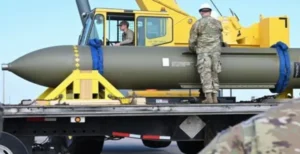
Could the U.S. Deploy Its Bunker Buster Bomb on Iran’s Fordow Nuclear Site? What Might Happen If It Does As tensions rise between Israel and Iran over the latter’s suspected nuclear weapons program, military analysts are speculating whether the United States could consider deploying its most powerful non-nuclear bomb — the GBU-57A/B Massive Ordnance Penetrator, often referred to as the “bunker buster” bomb — against Iran’s fortified Fordow nuclear facility. What Is the Bunker Buster Bomb? The GBU-57 Massive Ordnance Penetrator (MOP) is a 30,000-pound precision-guided weapon specifically engineered to penetrate deep into fortified underground targets. Capable of smashing through up to 200 feet of reinforced concrete or earth before detonation, it was designed for strategic targets like Iran’s Fordow site, a deeply buried uranium enrichment facility. However, deploying the GBU-57 requires the U.S. Air Force’s B-2 Spirit stealth bomber, the only aircraft capable of carrying and delivering this massive bomb. These bombers are based at Whiteman Air Force Base in Missouri and would need approximately 15 hours to reach Iran if called upon. Why Fordow Is a Strategic Target Located about 95 kilometers southwest of Tehran, Iran’s Fordow Fuel Enrichment Plant is carved into the side of a mountain and lies an estimated 260 to 300 feet underground — deeper than what even the bunker buster is guaranteed to reach with total success. The facility was intended to be impervious to most aerial attacks and remains one of Iran’s most heavily fortified sites. Although Iran originally agreed to suspend enrichment at Fordow under the 2015 Joint Comprehensive Plan of Action (JCPOA), it resumed activities there after the U.S. withdrew from the nuclear deal in 2018. Could the U.S. Realistically Use the GBU-57? Reports suggest that the Fordow facility may be within reach of the GBU-57, though some experts believe even this powerful bomb may not fully destroy the site due to its extreme depth. Former U.S. military officials have noted that the bomb’s effect is highly concentrated — designed to destroy underground bunkers with precision rather than cause large surface explosions. With Israel allegedly weakening Iran’s air defense systems through recent airstrikes, military strategists believe a U.S. stealth bomber could now potentially navigate through Iranian airspace more easily, making a bunker-buster strike technically feasible. However, using such a weapon would mark a significant escalation. As of now, the U.S. has never deployed the bunker buster bomb in combat, keeping it reserved for high-value strategic scenarios — such as against nuclear facilities in Iran or North Korea. Potential Consequences of a U.S. Airstrike on Fordow If the U.S. were to strike Fordow, it would likely trigger significant geopolitical fallout. Iran has consistently denied it is seeking nuclear weapons, claiming its nuclear program is purely for peaceful purposes. Any direct U.S. military action could prompt retaliation, potentially drawing American forces deeper into a regional conflict and destabilizing an already volatile Middle East. Moreover, international watchdogs like the International Atomic Energy Agency (IAEA) have issued warnings against military action targeting nuclear facilities, citing risks of environmental catastrophe and broader conflict escalation. Conclusion While the GBU-57 bunker buster bomb is one of the most formidable tools in the U.S. military arsenal, its use against Iran’s Fordow nuclear facility would represent a drastic shift in policy and risk inflaming tensions across the region. Whether or not the U.S. will resort to such a strike remains uncertain, especially as diplomatic and military calculations continue to evolve amid rising hostilities.

Scroll to Top