Newsbeat

Newsbeat

Serious Questions Raised Over Alleged False Allegations Against Second-Year Student by Faculty of Department of Philosophy, Zakir Husain Delhi College, University of Delhi

New Delhi: According to sources, serious concerns are being raised regarding the academic environment and institutional accountability within the Department of Philosophy, Zakir Husain Delhi College, University of Delhi, after allegations of continuous mental harassment, academic discrimination, intimidation, and false criminal charges surfaced against Purusottam Bihari, a second-year Philosophy (Hons.) student of Zakir Husain Delhi College. Sources claim that the student, who has represented his college at national and international academic platforms, allegedly became a target after raising academic concerns and questioning alleged irregularities of Dr. Renu, a faculty member of the Department of Philosophy, ZHDC. According to sources, he was repeatedly humiliated before students and staff members, mentally harassed, socially isolated, removed from academic responsibilities, and deliberately awarded extremely low marks in Internal Assessment (IA) and Continuous Assessment (CA). Sources further allege that, despite receiving fair marks from teachers of other papers, he was unfairly targeted academically in the paper taught by Dr. Renu. The controversy escalated after police complaint allegations related to sexual harassment, stalking, and inappropriate conduct were made against the student by Dr. Renu. The student has categorically denied all allegations and maintained that no CCTV footage, electronic evidence, witness testimony, or documentary proof has been publicly produced to support such serious accusations. According to sources, the same was allegedly done with malicious intention in order to destroy the life and career of the student. According to sources, the student also alleged that, despite repeatedly submitting complaints, documents, medical records, screenshots, witness details, and other supporting material before the college administration and authorities, no effective action has been taken so far by Zakir Husain Delhi College and the University of Delhi. It is further alleged that, despite multiple complaints and representations, the student has been denied protection and justice. Sources further state that a police complaint was filed by Dr. Renu at Kamla Market Police Station against Purusottam Bihari. Yet, according to the student, he peacefully attempted to continue attending classes; however, he was allegedly denied entry into the classroom and claims to possess audio proof regarding the same. Further, a report against the student was also reportedly submitted to the Cyber Department, Jyoti Nagar. However, according to sources, the student received a clean chit from the cyber authorities and also received unconditional support from certain concerned police and cyber officials. The matter has now raised broader questions regarding student rights, misuse of authority, fairness in academic institutions, accountability, and the treatment of students who raise concerns regarding academic irregularities and institutional functioning within the Department of Philosophy, Zakir Husain Delhi College, University of Delhi. The issue has also sparked concerns regarding ethics, professional conduct, and accountability within educational institutions, and whether the future of hundreds of students should remain in the hands of faculty members facing such serious allegations of misconduct. Sources further state that demands have been made for an independent inquiry, production of CCTV footage and electronic evidence before the concerned authorities, and protection of the student’s dignity, academic future, and constitutional rights. It is also alleged that the student has approached a court of law and demanded a lie detector test on Dr. Renu in order to protect himself and safeguard the future of hundreds of students.

Delhi Cloud
Newsbeat

Delhi Cloud Seeding 2025: Hope vs Challenges

Abstract In October Delhi’s Cloud Seeding Trials, October 2025: A Promising yet Challenged Approach to Combat Air Pollution” Abstract In October 2025, Delhi conducted its first cloud seeding trials to induce artificial rain and mitigate severe post-Diwali air pollution (AQI ~300–400). Collaborating with IIT Kanpur, the government deployed a Cessna 206H aircraft to disperse silver iodide and sodium chloride into clouds. Despite two trials on October 28, no measurable rainfall occurred due to low atmospheric moisture (10–20%). This study examines the experiment’s outcomes, challenges, and implications for Delhi’s pollution crisis. 1. Introduction 2. Methodology 3. Results 4. Challenges 5. Expert Insights 6. Government Response 7. Conclusion Cloud seeding showed marginal short-term benefits but failed to induce rain. Success requires optimal moisture, sustained efforts, and systemic reforms. Delhi must prioritize reducing emissions, not just symptoms. ✅ TL;DR Delhi’s cloud seeding trials (Oct 2025) faced moisture deficits, offering temporary AQI relief but no rain. Experts urge holistic solutions. References Writer Dr. Swarnlata Panchal Associate Professor, Department of Medical Biotechnology Director – International Affairs, NIMS University Jaipur, India Honorary Scientist – Community Medicine, AIIMS India Director – Nicole Ed Pvt. Ltd. (Medical Education) PhD (Medical Biotechnology) | MBA (International Business) 🔗 Nicole Ed Pvt. Ltd. | Healthcare Researcher & Education Leader📍 Based on ongoing developments and discussions during the October 2025 Healthcare Summit, Delhi.

Newsbeat

Uttarkashi Cloudburst 2025: Rescue Ops Intensify

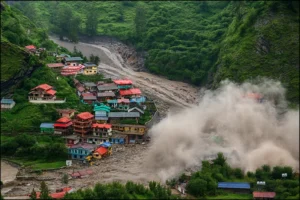
A Peaceful Himalayan Hamlet Turned Into a Scene of Urgent Rescue In the serene heights of Uttarakhand, the peaceful village of Dharali, nestled on the pilgrimage route to Gangotri Dham, found itself in the grip of nature’s fury. On August 5, 2025, a rare and intense cloudburst occurred in the Kheer Ganga catchment, unleashing sudden flash floods that swept through the region, leaving behind emotional scars, damaged structures, and disrupted lives. While four individuals have been confirmed dead, the number of missing persons has risen to nearly 100, including 11 Indian Army personnel stationed in nearby Harsil. This event is not just a natural disaster—it is a story of resilience, coordinated relief, and hope. What Caused the Flash Flood? The India Meteorological Department (IMD) recorded over 210 mm of rainfall in just 24 hours, a significant spike over usual monsoon activity. The term “cloudburst” is used when rainfall exceeds 100 mm per hour over a localized area—leading to rapid and forceful flooding. Experts suggest that the cause behind such events lies in a combination of monsoon intensification and the upper-level Western Disturbance, further intensified by climate change and topographical vulnerabilities in the Himalayan belt. Human Impact: Evacuations, Missing Persons, and Shelter The flash floods caused sudden water surges that washed away more than 50 hotels, homestays, and 40–50 houses. Tourism infrastructure in Dharali—once a haven for spiritual seekers and nature lovers—now stands in ruins. However, thanks to swift and courageous efforts, over 130 people were safely evacuated by Indian Army troops, NDRF, SDRF, and local disaster authorities using helicopters and ground rescue equipment. Amidst the devastation, stories of compassion continue to emerge—locals offering shelter, volunteers preparing food packets, and relief camps providing medical support. Schools and colleges remain safely shut in affected areas to prevent further risk. Ground-Level Rescue Operations in Full Swing More than 150 Army personnel, assisted by tracker dogs, drones, and heavy machinery, have been deployed to continue search and rescue operations. Relief teams are racing against time as continuous rainfall and blocked roads, especially on the Uttarkashi–Harsil route, have made access difficult. The Indo-Tibetan Border Police (ITBP) and state police are working in coordination with air support teams to locate the missing, provide aid, and restore basic infrastructure. Chief Minister Pushkar Singh Dhami promptly returned from Andhra Pradesh to monitor the situation and visit ground zero in Dharali. Prime Minister Narendra Modi has personally spoken with the Chief Minister and extended full Central Government support for relief and long-term recovery. Eyewitness Voices: Stories from the Ground Many residents compare the current scenario to the 2013 Kedarnath floods, with one survivor sharing, “The river roared like a lion… we had no idea it was coming. People ran, screamed… then silence.” Such personal accounts remind us that beyond the numbers lie human lives, shaken but determined to rebuild. Local leaders estimate that 10–12 individuals may still be trapped, and up to 25 hotels have been entirely destroyed. The Army helipad and parts of the Harsil camp have also sustained damage. Climate Warnings: Is This the New Normal? Experts are drawing attention to the climate crisis that is silently unfolding in the Himalayan region. Increased deforestation, unregulated construction, and lack of environmental planning are amplifying the effects of natural events like cloudbursts. “Nature isn’t angry,” says one environmental scientist, “It’s just reacting to how we’ve treated it.” Such moments serve as a call to action for eco-conscious development, sustainable tourism, and climate resilience planning—especially in fragile ecosystems like Uttarakhand. The Road Ahead: Relief, Healing, and Rebuilding The immediate priority remains rescue and recovery. Relief camps have been set up with food, clean water, shelter, and medical services. The IMD has forecast continued rainfall till August 10, and authorities have issued alerts in vulnerable zones. Helpline numbers and emergency control rooms have been made available for citizens, while local volunteers continue to support administration efforts on the ground. In the long term, both state and central governments have committed to: Conclusion: From Tragedy to Togetherness What Dharali experienced is undoubtedly a tragedy, but it is also a testament to human spirit, unity, and environmental awareness. In the face of uncertainty, people came together—villagers, officers, medics, and volunteers—to protect lives and support each other. Let this event not just be remembered for its destruction, but as a wake-up call to safeguard the Himalayan ecosystem and rethink our relationship with nature.

Newsbeat

Bangladesh after Sheikh Hasina: A Year of Turmoil

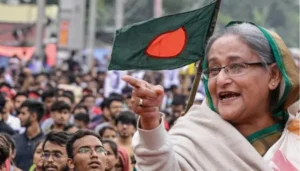
Bangladesh After Sheikh Hasina’s Ouster: A Year of Broken Promises and Rising Discontent Bangladesh after Sheikh Hasina’s ouster has taken a direction few could have predicted. When Nobel laureate Professor Muhammad Yunus assumed leadership as the Chief Adviser of the interim government in August 2024, there was widespread optimism. Citizens hoped for a transparent, democratic renewal after years of political fatigue. Yet one year later, the ground reality is different — marked by economic strain, governance gaps, civil unrest, and shattered promises. Uprising or Engineered Change? The Reality Unfolds The story of Bangladesh after Sheikh Hasina’s ouster began with what appeared to be a student-led revolution against the government’s job quota system. But as time passed, public discourse and international reports suggest that the movement was anything but spontaneous. Multiple credible sources — including Reuters, Al Jazeera, and The Guardian — have reported that the Jamaat-e-Islami, an Islamist party historically opposed to Bangladesh’s independence, was instrumental in executing a meticulously planned regime change. Allegedly backed by foreign influences like Pakistan, China, and the United States, the plan culminated in Hasina’s ouster and the rise of Yunus. Today, this narrative is widely accepted, replacing the myth of a spontaneous democratic awakening. The Interim Government: Reforms Promised, But Not Delivered In Bangladesh after Sheikh Hasina’s ouster, Yunus promised sweeping reforms — from trials against state violence to anti-corruption drives and a fresh electoral process by early 2026. Eleven reform commissions were established to overhaul governance, electoral laws, and the judiciary. But a year later, most reforms remain stuck. The proposed National Constitutional Council, aimed at bringing institutional clarity, still lacks parliamentary backing. Citizens now view the interim setup as slow, bureaucratic, and disconnected from ground realities. Economy Under Pressure, Hope on the Decline One of the biggest letdowns in Bangladesh after Sheikh Hasina’s ouster is the economic downturn. Inflation has surged to 11–14%, and GDP growth has plummeted from 5.7% to just 4%, according to the World Bank. The banking sector, once the pride of the Bangladeshi economy, is now riddled with bad loans, fraud, and leadership failures. Public confidence is eroding rapidly, with street protests erupting over public sector wage cuts, job uncertainty, and currency devaluation. Even Yunus’s well-intentioned economic policies haven’t been able to contain the backlash, making it clear that the nation’s financial systems need more than symbolism — they need action. Cracks in Democracy: Press Freedom and Civil Rights at Risk A painful irony in Bangladesh after Sheikh Hasina’s ouster is the suppression of press freedom under a regime that promised transparency. Over 640 journalists have faced harassment, threats, or arrests in the last year. Investigative journalism has been stifled. Government agencies have revoked media credentials, restricted independent reporting, and shut down dissenting outlets. The overall environment has become dangerous for whistleblowers, with mob violence and attacks on religious minorities on the rise — largely unchecked by law enforcement. Public Disillusionment: From Hope to Despair People once cheering for change now whisper about the “better old days.” In Bangladesh after Sheikh Hasina’s ouster, public sentiment has shifted drastically. With reforms delayed and institutions weakened, citizens feel betrayed. Former Prime Minister Sheikh Hasina, in a public letter from exile, described Yunus’s government as a “dark moment in Bangladesh’s history,” claiming she never officially resigned. Her message resonated with many who now feel the cost of regime change has been too high. Meanwhile, political opposition is gaining momentum. Thousands joined anniversary rallies in Dhaka demanding a clear roadmap for elections. The BNP and other groups are pressing for elections by December 2025, while accusing Yunus of avoiding timelines. A Ray of Light: Culture and Identity Preservation Despite the unrest, Bangladesh after Sheikh Hasina’s ouster has witnessed a revival in arts and culture. With support from architect Marina Tabassum, new initiatives are focusing on preserving Bangladesh’s contemporary artistic legacy. These cultural movements are helping reclaim national identity and provide hope, particularly among youth, artists, and educators. One Year On: The Crossroads of Crisis and Change The state of Bangladesh after Sheikh Hasina’s ouster can be summarized in a few truths: Final Thoughts As Bangladesh navigates the aftermath of Sheikh Hasina’s exit, it finds itself at a fragile juncture. The interim government under Muhammad Yunus has not yet delivered on its promises. Hopes of reform have dimmed, giving way to economic distress, political unrest, and civil dissatisfaction. For any meaningful progress, Bangladesh after Sheikh Hasina’s ouster needs more than idealism. It needs transparent leadership, tangible action, and a commitment to restoring the trust of its people.

Newsbeat

Meerut Cantt Panic as Army Jawan Drives on Platform

Meerut Cantt, Uttar Pradesh — August 2, 2025: A shocking security breach at Meerut Cantt railway station late Friday night has raised serious questions about railway safety. In a bizarre and dangerous incident, an Army jawan, identified as Sandeep Dhaka (also reported as Sandeep Daka), drove his private car directly onto Platform No. 1 while allegedly under the influence of alcohol. The car—a Jharkhand-registered Maruti Alto—entered the station premises by breaking through security barriers, coming perilously close to the moving Nauchandi Express, and causing widespread panic among passengers. The entire episode lasted nearly 20 minutes and was captured in viral videos that have since sparked outrage on social media. What Happened at Meerut Cantt Railway Station Eyewitnesses and railway officials report that the car entered the platform at high speed at approximately 10:15 PM on August 2, 2025. At that moment, the Nauchandi Express was slowly departing from Platform No. 1. Passengers were seen screaming and running for safety as the car drove dangerously close to the moving train—missing it by mere inches. Benches on the platform were damaged as the vehicle zigzagged around, causing chaos and confusion. The station, usually calm at that hour, turned into a scene of alarm and disbelief. Fortunately, no injuries or fatalities were reported, although several passengers suffered panic attacks. Why the Army Jawan Drove onto the Platform Sandeep Dhaka, a serving soldier posted in Delhi and a native of Baghpat, later told officials that he was trying to help his relatives catch the train. According to his statement, they had missed the earlier Yoga Express and were hoping to board the Nauchandi Express instead. In a misguided attempt to ensure they didn’t miss the train again, Dhaka decided to drive straight onto the platform. Authorities, however, say this does not justify the recklessness of his actions, especially under alleged intoxication. Legal Action and Arrest Details The Railway Protection Force (RPF) and Government Railway Police (GRP) quickly responded to the incident. Dhaka was taken into custody at the scene, and his vehicle was seized. A medical test later confirmed that he was under the influence of alcohol. An FIR has been registered against him under multiple sections of the Railways Act—including 145(B) (nuisance), 147 (trespassing), 154 (endangering safety), and 159 (drunkenness)—as well as Section 34 of the Police Act. His driving licence has been suspended, and the cancellation process has been initiated. Additionally, the Military Police is conducting an internal investigation, as disciplinary action from the Army is also likely. Viral Videos and Public Reaction on Social Media As video clips of the incident circulated across platforms like Instagram and X (formerly Twitter), netizens expressed disbelief, anger, and even sarcastic humor. Some users mocked the situation with memes, while others strongly condemned the act for putting public lives at risk. Public opinion is sharply divided, but most agree that the breach reflects a severe lapse in station security. Security Concerns and Railway Response The Meerut Cantt platform incident has ignited a broader debate on the vulnerabilities of railway stations in India. Experts are calling for an immediate review of station security protocols to prevent similar breaches in the future. Key concerns highlighted include: Issue Concern Security breach Unauthorized civilian vehicle accessed restricted platform area Public safety Passengers were put at serious risk; nearly caused a collision with a moving train Accountability Legal actions underway; military disciplinary inquiry initiated against the jawan Senior railway officials have promised tighter access controls, better monitoring, and strict action against any form of negligence. No Casualties Reported Thankfully, despite the sheer recklessness of the act, no passengers or railway staff were injured. This has been credited to quick thinking by passengers and the relatively slow speed of the departing train. A Wake-Up Call for Indian Railways This incident serves as a grim reminder of the urgent need for enhanced surveillance and stricter enforcement at railway stations across India. The Meerut Cantt platform car incident should not be seen as a one-off but rather as a signal to reassess how secure our public transit spaces truly are. Conclusion While the Army jawan claimed he was acting in urgency for a medical situation, the method he chose has drawn widespread condemnation. The incident has prompted not just legal consequences but a much-needed public discourse around safety, accountability, and systemic reform in India’s railway security.

Newsbeat

Ladakh Army Convoy Crash: 2 Soldiers Dead, 3 Hurt

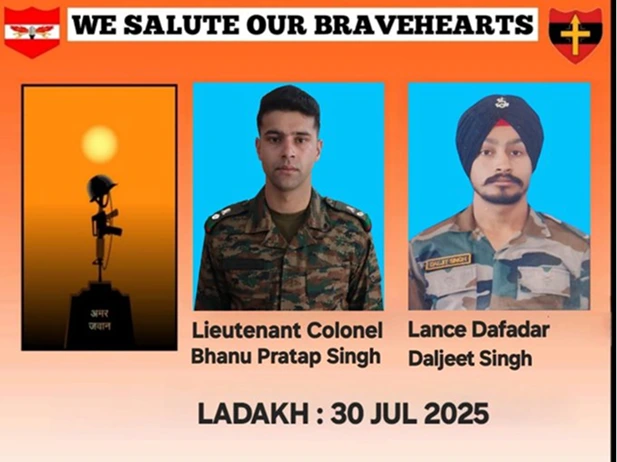
🇮🇳 Tragedy in Ladakh: Boulder Crushes Army Convoy, Kills Two Bravehearts, Injures Three NEW DELHI, July 30, 2025 — In a heartbreaking incident that shook the nation, Lieutenant Colonel Bhanu Pratap Singh Mankotia and Lance Dafadar Daljeet Singh of the Indian Army lost their lives when a massive boulder fell on a military convoy vehicle in the eastern Ladakh region on Wednesday morning. The tragic accident occurred during a routine movement of forces in the Galwan sector, exposing the harsh and unpredictable terrain hazards soldiers face even during peacetime operations. Timeline of the Incident At approximately 11:30 AM, a convoy was en route from Durbuk to Chongtash, near Charbagh, when a rock dislodged from a cliff and smashed into one of the vehicles. The impact was so severe that it instantly killed two personnel and critically injured three others. Location: Galwan Sector, Eastern LadakhTime: Around 11:30 AMRoute: Durbuk to ChongtashCause: Boulder fall from a high cliff The Brave Souls We Lost 🪖 Lieutenant Colonel Bhanu Pratap Singh Mankotia Unit: 14 Sindh Horse RegimentA decorated officer remembered for his discipline and leadership, Lt Col Singh was leading the mission when tragedy struck. 🪖 Lance Dafadar Daljeet Singh Unit: 14 Sindh Horse RegimentKnown for his commitment and courage, Daljeet Singh stood firm with his unit until the very end. The Fire and Fury Corps paid tribute on X (formerly Twitter): “GOC, Fire and Fury Corps and all ranks salute Lt Col Bhanu Pratap Singh and Lance Dafadar Daljeet Singh, who made the supreme sacrifice in Ladakh.” Injured Officers in Critical Condition Three other officers sustained injuries and were immediately airlifted to the Army hospital in Leh: 🏥 Status: Stable but critical📍 Hospital: Army Base Hospital, Leh Why This Incident Matters: Terrain Hazards in Ladakh Ladakh is among the most difficult terrains for military operations, often exposed to: Operating at altitudes above 14,000 ft, troops not only face adversaries but also geological threats, especially along the Line of Actual Control (LAC) with China. Army Response and Recovery Operations Following the incident, units from the Fire and Fury Corps carried out emergency recovery operations: 🔎 Current Status: Investigation and terrain risk analysis underway Non-Combat Hazards: A Silent Threat While the media often highlights combat casualties, non-combat-related military deaths—due to environmental conditions, accidents, or terrain—are a growing concern. This tragic event underlines the need for advanced safeguards like: 🇮🇳 Nation Pays Tribute: Service Before Self Across social media and public forums, condolences poured in for the fallen heroes. Senior officials and citizens united in grief, expressing solidarity with the families. The Indian Army reaffirmed its commitment to the safety and dignity of every soldier, ensuring that the families of the deceased receive: What’s Next: Army to Review Terrain Safety Protocols In the wake of this incident, the Army is expected to: ✅ Reassess convoy movement routes✅ Implement terrain-specific safety audits✅ Introduce new tech-enabled risk monitoring✅ Conduct mandatory landslide & rockfall drills These steps aim to ensure that no more lives are lost to nature’s unpredictable threats. Conclusion: A Wake-Up Call from the Mountains The loss of Lt Col Bhanu Pratap Singh Mankotia and Lance Dafadar Daljeet Singh is not just a military loss—it is a national tragedy. Their sacrifice outside of combat symbolizes the ongoing challenges India’s soldiers face every day to protect our borders. As we honor their memory, this incident must serve as a trigger for policy change, infrastructure upgrades, and strategic innovation to safeguard the lives of those who serve selflessly.

Newsbeat

US Sanctions Hit Indian Companies Over Iran Oil Trade

US Sanctions on Indian Companies Over Iran Oil Trade: What You Need to Know In a major geopolitical move, the United States has imposed sanctions on eight Indian companies and five nationals for their alleged involvement in Iran’s energy trade network, raising serious concerns across global trade and security circles. This is part of Washington’s renewed strategy to cut off funding sources for Iran’s nuclear and military programs. Here’s a simplified breakdown of the situation, why it matters, and how it could impact Indian businesses. 🇺🇸 Why Did the US Sanction Indian Companies? The US sanctions on Indian companies were officially announced on July 30, 2025, as part of a larger action against over 20 global entities. These firms were found to be actively trading Iranian petroleum products, including crude oil, petrochemicals, and refined products. The move is part of the revived “maximum pressure campaign” under the Trump administration aimed at reducing Iran’s oil exports to zero. According to the US Department of State, these transactions were valued at more than $220 million, taking place between 2023 and 2024. Indian Companies Named in the US Sanctions Here are the six key Indian companies identified in the sanctions: These companies now face asset freezes, and US businesses are prohibited from engaging with them. The restrictions also extend to subsidiaries or associates with 50% or more ownership by these sanctioned firms. Focus Keyword Usage: US sanctions on Indian companies have brought trade operations for several Indian firms to a standstill, especially those tied to international supply chains. What is the Link to Iran’s Shipping Empire? The US Treasury Department’s Office of Foreign Assets Control (OFAC) simultaneously announced its largest Iran-related sanctions package since 2018. Over 50 individuals and companies and more than 50 vessels were sanctioned for being part of a vast, illicit shipping network run by Mohammad Hossein Shamkhani, the son of Ali Shamkhani, a senior advisor to Iran’s Supreme Leader. This shadow fleet reportedly operates across 17–20 countries, including India, UAE, Marshall Islands, Hong Kong, and EU nations. It uses deceptive practices like: These tactics aim to evade sanctions and obscure the origin of Iranian oil. Impact of US Sanctions on Indian Companies and Economy The US sanctions on Indian companies could have wide-ranging implications: Trade worth over $220 million is now under the scanner, which could also strain India-US trade relations, particularly in the petrochemical sector. What This Means for the Global Market The US crackdown on this Iranian shadow fleet could tighten the screws on Iran’s oil exports, which are a crucial source of revenue for the country. According to US intelligence, these earnings are used to fund missile programs, proxy militias, and other activities that undermine regional stability. Although the immediate impact on global oil prices is expected to be minimal, future supply chain disruptions can’t be ruled out. Analysts believe this move sends a clear message: bypassing sanctions won’t be tolerated—regardless of nationality. Conclusion: A Wake-Up Call for Global Businesses The US sanctions on Indian companies serve as a critical reminder for all international businesses to ensure compliance with global trade laws. Whether directly or indirectly, dealing with blacklisted nations like Iran can lead to severe economic and legal consequences. For India, this situation could prompt a re-evaluation of overseas trade policies—especially those involving high-risk nations. As global geopolitics evolve, businesses must stay informed and cautious.

Thailand–Cambodia Border Clash
Newsbeat

Thailand–Cambodia Border Clash: Travel Alert Issued

Thailand–Cambodia Border Clash 2025: Indian Embassy Issues Travel Advisory as Conflict Escalates Updated: July 26, 2025 | Location: Phnom Penh, New Delhi | By: Stronic Media Desk The ongoing Thailand–Cambodia border conflict, which erupted on July 24, 2025, has taken a deadly turn, leaving at least 32 people dead and displacing over 130,000 civilians across both nations. This marks the most intense military confrontation between the two Southeast Asian countries in over a decade. What Happened at the Border? The violent clashes broke out near the long-disputed Ta Muen Thom and Ta Krabei temples—located along a 500-mile stretch of contested territory. Both nations have exchanged heavy artillery, rocket fire (BM‑21), and airstrikes, resulting in destruction and chaos in several villages and border outposts. According to officials, 13 Cambodians have died so far, while Thailand has reported 6 soldiers and 13 civilians killed, including children. More than 130,000 residents from both sides—58,000 Thais and 23,000 Cambodians—have fled their homes and sought temporary shelter in schools, temples, and government facilities. Indian Embassy Advisory for Nationals in Cambodia As the border violence continues to escalate, the Indian Embassy in Phnom Penh has issued a strong advisory urging Indian citizens to avoid traveling to any Cambodian-Thai border areas until further notice. In case of emergency, Indian nationals can contact: Additionally, a separate alert has been issued for India-based travelers, advising them to steer clear of seven Thai provinces bordering Cambodia, which are now under military watch. Background: Why Are Thailand and Cambodia Fighting? Although the current skirmish started in July 2025, the tension has been simmering for months. In May 2025, a Thai soldier was severely injured by a landmine in the Nam Yuen district of Thailand’s Ubon Ratchathani province. Thailand accused Cambodia of planting Russian-made PMN-2 anti-personnel mines, in violation of international treaties. The political backdrop is also heating things up. Reports of leaked phone calls involving Thailand’s Shinawatra family and Cambodia’s Hun Sen and Hun Manet have fueled nationalist outrage and worsened diplomatic relations. Adding to this, long-standing disputes over temple territories—including the Preah Vihear Temple—remain unresolved, despite a 1962 International Court of Justice (ICJ) ruling. Military Escalation: Airstrikes, Rockets, and Accusations On July 24, Cambodian forces allegedly opened fire near Ta Muen Thom. Thailand immediately launched “Operation Yuttha Bodin,” deploying F-16 fighter jets, heavy artillery, and counter-attacks. Cambodia has accused Thailand of using cluster bombs—banned under the Convention on Cluster Munitions. Thailand denied the claims, citing that it is not a signatory to the treaty. Meanwhile, both sides have accused each other of: Civilians Displaced: Thousands on the Move Thousands have abandoned their homes, fearing airstrikes and shelling. Over 5,000 refugees have taken shelter at Thailand’s Chang International Circuit, while others are scattered across schools, temples, race circuits, and public buildings. “I panicked… then the bomb hit,” said a resident from Ubon Ratchathani, recalling the moment of impact. Diplomatic Efforts: UN and ASEAN Step In The United Nations Security Council (UNSC) held a closed-door emergency meeting on July 25, where all 15 member nations urged both sides to exercise restraint and seek peaceful resolution. Malaysia, chair of ASEAN, offered to mediate the conflict. Cambodia agreed to a ceasefire, while Thailand showed initial interest but later retracted, favoring bilateral discussions over multilateral intervention. Global Reactions: What Lies Ahead? ▪️ Risk of Full-Scale War With martial law declared and military movement increasing, analysts warn that this border conflict could spiral into a larger regional war. ▪️ Humanitarian Crisis Displacement, destroyed infrastructure, and civilian trauma could become unmanageable if peace is delayed. ▪️ Diplomatic Deadlock Thailand’s preference for bilateral talks may hinder broader international mediation efforts. ▪️ Nationalist Politics Leaders on both sides are under pressure from nationalist forces, which could complicate efforts to de-escalate. Conclusion: A Call for Caution The Thailand–Cambodia border clash of 2025 has already resulted in tragic loss and displacement. With active military zones, escalating rhetoric, and stalled diplomacy, the international community remains on high alert. For Indian nationals, it is strongly advised to avoid all border zones and keep in touch with the Indian Embassy in Phnom Penh for real-time updates and assistance. Stay informed, stay safe.

Newsbeat

India UK Free Trade Deal Signed in 2025

PM Modi’s Historic UK Visit: India-UK Free Trade Agreement Signed, Meets King Charles, Heads to Maldives London, July 24, 2025 — Prime Minister Narendra Modi concluded his high-level visit to the United Kingdom with two significant milestones: the signing of the India–UK Free Trade Agreement (FTA) and a ceremonial meeting with King Charles III. This visit, which marks Modi’s fourth official tour to the UK since taking office, strengthens both economic and diplomatic relations between the two nations. The landmark India-UK FTA, finalized after over three years of negotiations, is being hailed as Britain’s biggest trade deal since Brexit, promising to redefine bilateral trade for decades. The day concluded with a warm royal engagement at Sandringham House, where PM Modi presented a symbolic tree sapling under his “Ek Ped Maa Ke Naam” campaign. Key Highlights: A Game-Changing Free Trade Agreement Signed at Chequers, the official country residence of UK Prime Minister Keir Starmer, the India–UK FTA represents a major leap in the global trade landscape. The agreement was signed by Commerce Minister Piyush Goyal on behalf of India and UK Business Secretary Jonathan Reynolds. The deal targets a £25.5 billion (USD 34 billion) increase in annual bilateral trade by 2040 and is projected to add £4.8 billion annually to the UK economy. For India, this agreement provides duty-free access for 99% of Indian exports, especially in critical sectors like textiles, apparel, gems & jewellery, leather, marine products, and food. British exports such as whisky, premium cars, and industrial goods will see significant tariff reductions. For instance: Strategic Business Gains for Both Nations The FTA is not just about numbers—it’s about job creation, investment, and mobility. The UK government estimates that this trade pact will: For Indian exporters, this is a golden opportunity. Textile hubs like Tiruppur, Surat, and Ludhiana; leather clusters in Agra and Kanpur; and jewellery makers across Gujarat and Maharashtra are expected to benefit immensely. Additionally, the FTA includes mobility provisions easing short-term visa access for Indian professionals in sectors like IT, law, finance, and consultancy. A notable clause also allows Indian professionals posted in the UK to be exempt from paying national insurance, sparking both praise and political debate in the UK. PM Modi Meets King Charles III: Diplomacy Meets Environmental Values In a powerful symbol of friendship and shared values, PM Modi met King Charles III at Sandringham House on the same day. As part of his global environmental movement “Ek Ped Maa Ke Naam”, he presented the King with a Davidia involucrata ‘Sonoma’ tree sapling, which will be planted in autumn on royal grounds. The gesture signifies India’s commitment to sustainable diplomacy and cultural respect. The campaign encourages children to plant a tree in honor of their mothers—a fusion of Indian tradition and global ecological responsibility. The Road Ahead: Ratification and Bilateral Investment Treaty While the agreement has been signed, it is yet to be ratified by the UK Parliament and India’s legislative bodies—a process expected to take a few months. Two key issues remain under negotiation: Once these are addressed, the FTA is expected to go into effect by early 2026, unlocking a new era of India-UK strategic partnership. Modi’s Next Stop: The Maldives With the UK leg of his diplomatic tour complete, PM Modi departed for the Maldives—a strategic ally in the Indian Ocean region. The second phase of this visit aims to deepen India’s regional ties, focusing on climate action, defense cooperation, and maritime security. This back-to-back diplomacy underscores India’s growing global footprint, as Modi continues to push for stronger alliances, sustainable trade, and climate leadership. Conclusion PM Narendra Modi’s visit to the UK in July 2025 was not just a diplomatic trip—it was a historic moment for both nations. With the Free Trade Agreement signed, business ties deepened, and a heartfelt royal engagement, this visit has laid the foundation for a stronger, more sustainable, and mutually beneficial partnership between India and the United Kingdom. As India eyes global leadership in both trade and diplomacy, this landmark visit stands as a testament to its vision of “Vasudhaiva Kutumbakam”—the world is one family.

Newsbeat

Russian Plane Crash in Amur: 49 Feared Dead

Russian Plane Crash in Amur Region: 49 Feared Dead After Antonov An‑24 Tragedy A Tragic Day in Russia’s Skie On July 24, 2025, a twin-propeller Antonov An‑24 passenger aircraft, operated by Angara Airlines, crashed in a remote forested region of Russia’s Amur region, close to the town of Tynda. The aircraft was carrying 49 people, including 43 passengers and 6 crew members—five of them children. The flight had departed from Blagoveshchensk and was on its second landing attempt at Tynda Airport when it suddenly disappeared from radar at 1 p.m. local time (0400 GMT). Wreckage Located — No Survivors Reported A Mi‑8 helicopter from Rosaviatsiya later located the burning fuselage on a densely forested mountain slope, 16 kilometers from Tynda. According to emergency crews, no survivors were found at the site. Videos captured from the air showed thick black smoke rising through the trees, confirming the severity of the impact. Despite treacherous terrain, over 25 personnel, four aircraft, and multiple helicopters were mobilized for the rescue and recovery mission. Ground teams struggled to access the crash zone due to steep slopes and forest density, so most search efforts were conducted from the air. What Caused the Crash? Early Theories Point to Weather & Crew Error While investigations are ongoing, preliminary reports suggest that the crash may have been caused by poor visibility and possible crew error during descent. According to reports from Sky News and Economic Times, dense fog blanketed the area, which impaired visibility during the critical landing phase. Aviation experts speculate the aircraft may have deviated from its intended descent path, contributing to the crash. The Antonov An‑24, introduced in the 1970s, is a Soviet-era aircraft that has seen widespread use across remote parts of Russia. Despite its age—nearly 50 years—the aircraft was reportedly certified to operate until 2036. However, the accident has reignited concerns over the use of aging fleets in high-risk regions. Criminal Investigation Underway Russia’s Investigative Committee has opened a criminal case under Article 263 of the criminal code, which pertains to violations of air traffic safety rules resulting in mass deaths. This is standard protocol for aviation disasters of this scale, but it also reflects the seriousness of suspected safety lapses. Spotlight on Russia’s Aging Regional Fleet The crash has drawn attention to the continued use of outdated aircraft in Russia’s remote and poorly connected regions. The Antonov An‑24 is no longer in use in many parts of the world, but remains common in Siberia and the Russian Far East where modern aircraft can’t always operate due to infrastructure limits. Angara Airlines, based in Irkutsk, operates around 22 aircraft, including older models like the An‑24. The airline has had prior incidents: in May 2025, one of its aircraft experienced a nose gear collapse at Kirensk Airport. Fortunately, no lives were lost in that event. Experts emphasize that budget constraints, weather conditions, and sparse maintenance facilities contribute to longer use of outdated models, often beyond their global industry lifespans. Rescue, Recovery & Investigation Efforts Continue Regional governor Vasily Orlov confirmed that the Emergency Ministry, Rosaviatsiya, and Rostransnadzor are leading ongoing search and forensic operations. The investigation will cover: Authorities have also announced a full safety audit of Angara Airlines, particularly focusing on fleet maintenance protocols and pilot training standards. The Human Impact: Beyond Numbers While officials continue the technical analysis, the emotional toll of this disaster is immense. The loss of five children has especially moved the nation, and DNA identification processes are currently underway for proper handover of remains. Government agencies have pledged to support grieving families, while counseling services are being offered in local towns affected by the loss. What This Tragedy Might Change The Amur crash is expected to spur changes in Russian aviation, including: While full policy shifts take time, experts are calling for immediate audits and a review of legacy aircraft still in service. Final Word The Russian Plane Crash in the Amur Region is not just a story of technical failure or pilot misjudgment—it’s a warning that safety in aviation must evolve with the environment and equipment used. As of now, all 49 onboard are presumed dead. The investigation continues, but one truth is clear: this tragedy must lead to accountability, better oversight, and long-overdue aviation reform, particularly in underserved and remote areas. Let this be more than just a news cycle. Let it be a catalyst for safer skies—for Russia, and for the world

Scroll to Top